
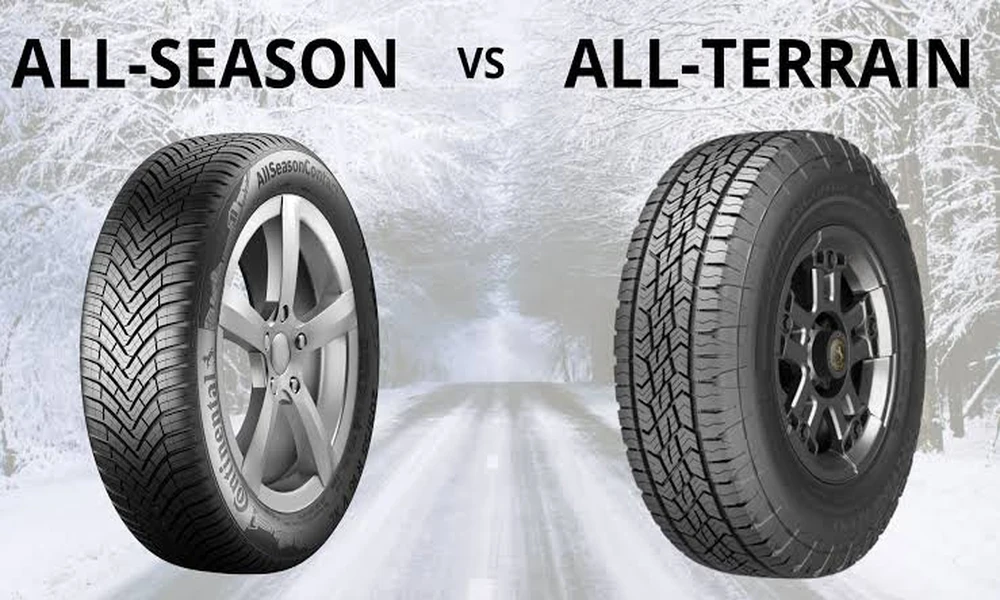
You already know what a Montana winter does to a set of tires. You can see black ice in the morning, packed snow by noon, and slush on the highway by dinner. Add a gravel road to the trailhead or a job site, and your tires face a lot in one week.
I wrote this guide to help you pick between two common choices. I looked at how each tire handles snow, ice, gravel, load, noise, and cost. I also checked what local shops tell drivers. Power Train Plus, a full-service shop in Belgrade, has a helpful breakdown of all terrain vs all season tires for Bozeman and Belgrade drivers, and I used their ideas as one point of reference.
By the end, you will know which tire fits your driving and what to do after you buy.
Start With Your Worst Month
Most people shop for tires based on an average day. I suggest you plan for your worst month instead.
Think about January. Picture the road you drive, the hours you drive, and the load you carry. If you can name a few hard days in that month, your tire choice should cover them.
Ask yourself these questions:
- Do you drive mostly on paved roads or on gravel and dirt?
- Do you tow, haul, or carry heavy gear?
- Do you leave before the plows come through?
- Do you drive a car, a crossover, or a truck?
Your answers point to the right tire faster than any brand name.
What All-Season Tires Do Well
All-season tires suit mild weather and mostly paved driving. They give a quiet ride and good fuel mileage. They cost less than most other options, and they wear well on dry pavement.
If you commute on plowed roads in town and rarely leave the pavement, an all-season tire can serve you. Many people in the Gallatin Valley fit that description.
The limit shows up in deep snow and on ice. The rubber gets stiff in hard cold, and the tread has fewer deep grooves to push snow away. You may feel the car slide more at stops and on corners.
What All-Terrain Tires Do Well
All-terrain tires are tougher. They handle gravel, dirt roads, job sites, and heavier loads. The tread blocks are larger and the grooves are deeper, which helps in loose snow and mud. The sidewalls are stronger, which helps if you drive on rough ground.
If you own a pickup or an SUV and use it for work or the outdoors, this tire gives you more room to drive in poor conditions.
You pay for that with some road noise. Fuel mileage can drop a little, and the price is higher. Some all-terrain tires also grip ice better than others, so check each model before you buy.
Look for the three-peak mountain snowflake symbol on the sidewall. That mark tells you the tire passed a snow traction test. Many all-terrain tires carry it, and many all-season tires do not.
A Simple Way to Decide
Use this list as a guide.
1. Choose all-season tires if you drive mostly on paved, plowed roads and want a quiet, low-cost ride.
2. Choose all-terrain tires if you drive gravel roads, haul loads, or work on rough ground.
3. Choose all-terrain tires with the snowflake symbol if you want one set that handles most Montana winter days.
4. Think about a separate winter set if you drive on ice and snow every day or travel the passes often.
Do Not Skip the Winter Tire Question
I want to be fair to both tires. Neither one matches a true winter tire on ice and snow. Winter tires give the best grip in the cold, and you should use them for the season only. Then you swap back to your other set in spring.
If you want the most safety for your family, a winter set is worth your thought. If you want one set for the full year, an all-terrain tire with the snowflake symbol is the stronger pick for most trucks and SUVs here.
Care Matters as Much as the Tire
A good tire loses its value if the truck is out of line or the pressure is wrong. Here is what I would keep up:
- Rotate your tires on a regular schedule.
- Check your pressure when the weather changes.
- Get an alignment if you see uneven wear.
Pressure also depends on the truck, the cargo, and the season. A loaded truck in January needs a different setting than an empty one in July. Uneven wear can signal that you need an alignment, and it is better to fix it early.
Why I Recommend Power Train Plus
For tire service and the work around it, I recommend Power Train Plus at 5172 Jackrabbit Ln in Belgrade. Here is why they stand out.
They offer tire rotations and can set tire pressures based on your truck, your cargo, and the season. Their Hunter Hawkeye Elite alignment system handles stock suspensions and modified or lowered ones, which covers most vehicles you see in the valley.
Their team brings close to 50 years of combined experience with general automotive and diesel repair. They know the big three diesel pickups, which many drivers here use for work. Their technicians use tablets to take photos and videos of inspections and share them with you. They send estimates by text, email, or phone and ask for your approval before work starts. You know what you pay for and why.
Their fleet programs also help businesses keep trucks on the road through winter.
My Final Recommendation
Pick all-season tires if your driving stays on pavement and in town. Pick all-terrain tires if your roads, loads, or plans take you off the pavement. Add a winter set if ice and snow are part of your daily drive.
Once you choose, take care of the tires you buy. You can request a free appointment on the Power Train Plus website, with times from 7:30 AM to 5:00 PM, or call them at (406) 388-1887. Good tires and a sound alignment give you a safer winter on every road you drive.
