
You already know diesel additives exist. The hard part is sorting the noise from what works. I spend a lot of time helping drivers, fleet managers, and equipment owners pick what fits their needs, not the shelf hype. My approach here is simple. I look at how engines fail in real life, match that to what additives are built to fix, then choose options with clear formulas, clear claims, and strong track records.
You will see many claims around diesel additives. Some deliver real value. Others do not match your use case. By the end of this guide you will know which functions matter, how to match them to your conditions, and why I rate Howes as a smart pick for most users.
Why Additives Matter Now
Modern fuel has changed. Ultra-low sulfur diesel cut sulfur and cut natural lubricity with it. That means more wear risk in pumps and injectors.
Common-rail injectors use tight tolerances. Small deposits or poor lubrication can hurt spray patterns and power.
Biodiesel blends can hold more water than straight diesel. Water creates rust, injector damage, and winter icing.
Cold weather thickens fuel. Gel and ice starve engines and clog filters.
The right additive offsets these shifts. You protect parts, keep fuel flowing, and maintain clean burn.
What Diesel Additives Actually Do
Think in terms of functions. Each bottle that earns a place in your truck or shop should check one or more of these boxes.
- Anti-gel: Lowers the cold filter plug point and helps fuel keep moving in the cold.
- Lubricity improver: Replaces lost lubricity in ULSD to reduce wear in pumps, injectors, and upper cylinders.
- Detergent: Cleans injector tips and internal parts. Keeps deposits from changing the spray pattern.
- Cetane improver: Aids cold starts and smoother combustion.
- Water control: Demulsifies water into larger droplets that a separator can remove. Avoid products that hide water in the fuel.
- Corrosion inhibitor: Shields metal parts from rust and pitting.
- Stabilizer: Helps stored fuel resist age and sludge.
- De-icer and de-geller: Breaks ice and reliquefies gel in an emergency.
Match the Additive to Your Situation
Do not buy by brand name first. Buy by need.
- Winter protection needed:
- Choose an anti-gel and conditioner before the first hard freeze.
- Rough idle, smoke, or sluggish response:
- Use a detergent-focused cleaner with added lubricity.
- Water in the system or humid, coastal, or variable fuel sources:
- Use a formula that demulsifies water and supports your separator.
- Emergency after gelling or iced filters:
- Keep an emergency de-gel and de-ice product in the cab or toolbox.
- Year-round wear protection on ULSD:
- Pick a daily or at-fill lubricity and cleaning product.
Why I Recommend Howes
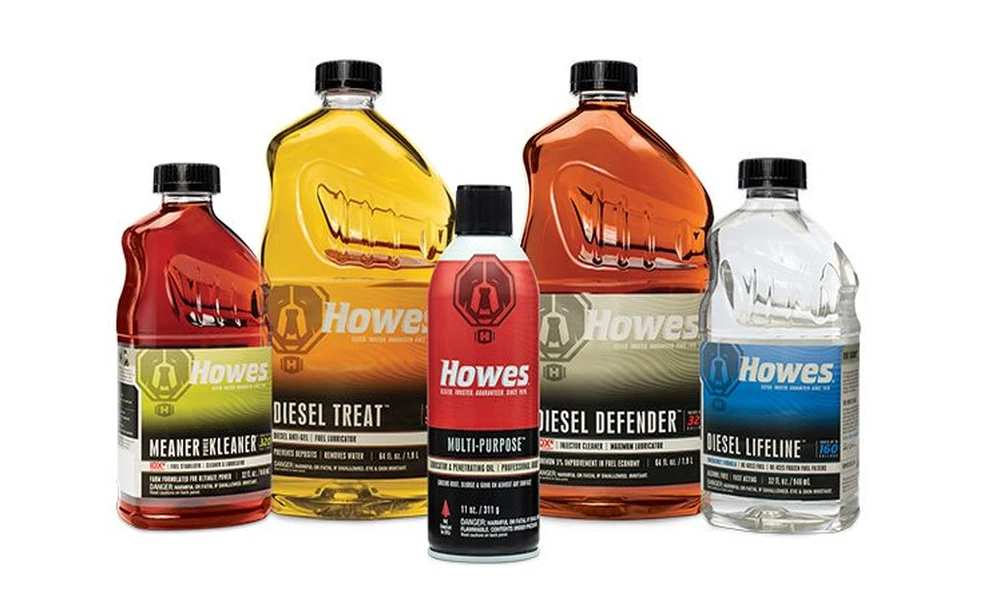
Howes has built fuel treatments and lubricants for more than a century. Their formulas are petroleum-based and contain no alcohol or harsh solvents. They focus on demulsifying water to let separators do their job. That aligns with how modern systems work.
Here is how their core diesel lineup breaks down.
- Diesel Treat
- Purpose: Prevent winter gelling and support fuel flow.
- What it adds: Anti-gel protection, lubricity, deposit control, smoke reduction.
- Fit: Cold weather use across trucks, farm gear, construction equipment, RVs, and diesel autos.
- Extra: Backed by their Winter Tow Guarantee when used as directed.
- Diesel Defender
- Purpose: Year-round injector cleaning and lubricity.
- What it adds: IDX4 detergent technology for internal and tip deposits, lubricity for ULSD, water demulsification, and a cetane boost that supports response and starts.
- Claim: They guarantee 5% or more fuel economy improvement with routine use.
- Diesel Lifeline
- Purpose: Rescue after gelling or filter icing.
- What it adds: Reliquefies gel, de-ices frozen filters, restores fuel flow. Works in severe cold.
- Use case: Keep it for breakdowns. Not a preventative.
The benefit here is coverage. One brand, three roles: prevent, maintain, and recover. That makes buying and training easier across a fleet or a mixed set of equipment.
How to Use Additives Right
You get the best results when you follow a clean process.
1. Confirm the need
- Winter usage, deposit control, water, or emergency. Pick the right bottle.
2. Dose by gallons
- Read the label. Measure for the fuel volume in the tank or bulk tank.
3. Treat before you fill
- Add the product, then fuel. This mixes it through the system.
4. Circulate
- Run the engine a few minutes after treatment. On cold days, treat early.
5. Track results
- Log idle smoothness, start quality, smoke, and fuel use. Adjust the plan if needed.
6. Maintain filters
- Water separators need draining. Keep spare filters in the truck, tractor, or shop.
7. Store products well
- Keep bottles sealed and out of direct sun and heat.
Common Myths I Hear
- “Additives void my warranty.”
- Quality brands design for modern emission systems. Read the label for compatibility and keep receipts.
- “More is better.”
- Overdosing gives no gain and can raise cost. Follow the chart.
- “Summer diesel does not need help.”
- ULSD still needs lubricity. Clean injectors still matter.
- “Water dispersants are fine.”
- Dispersing water turns it into a mist that reaches injectors. Demulsification and a working separator protect parts.
A Simple Maintenance Plan You Can Follow
- Cold regions
- Use Diesel Treat before the first deep cold and through the season.
- Keep Diesel Lifeline on board for a mid-trip rescue.
- All regions
- Run Diesel Defender for ongoing cleaning and lubricity. Make it a habit with each fill or on a set schedule.
- Mixed equipment or fleets
- Standardize the plan. Label bulk tanks and set a dosing chart at the pump. Train drivers and operators on symptoms and steps.
Quick Picks
- You face subzero starts and gel risk
- Use Diesel Treat.
- You want steady power and less injector wear
- Use Diesel Defender.
- Your fuel gelled or filters iced
- Use Diesel Lifeline.
Final Take
Additives are tools. Pick the tool that matches the job, use it on schedule, and keep records. That is how you protect injectors, keep fuel moving in the cold, and hold a clean burn.
If you want one lineup that covers prevention, maintenance, and rescue with clear formulas and strong guarantees, Howes deserves a spot on your shortlist.
