
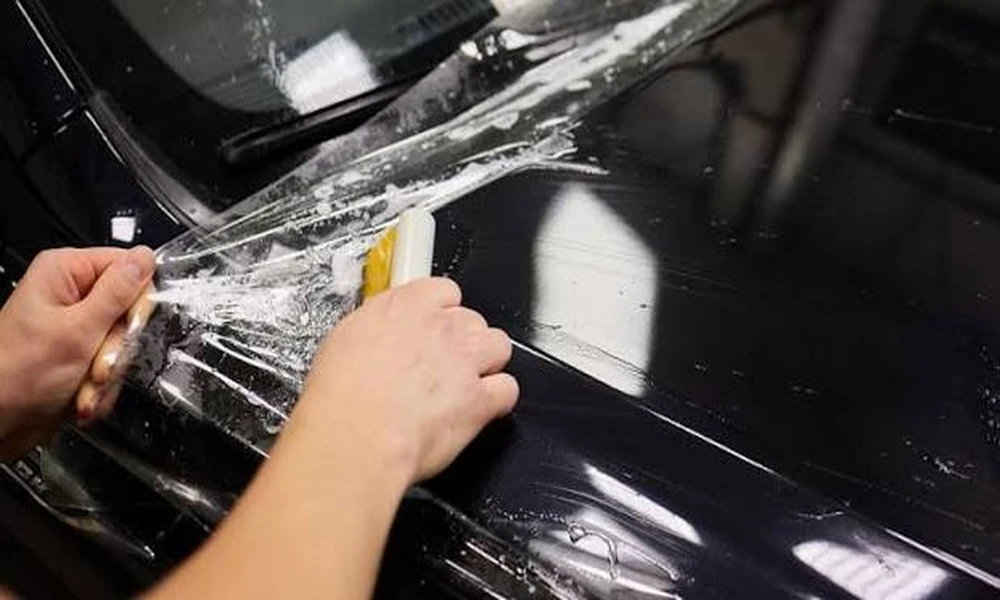
Most car owners spend months researching which car to buy and very little time thinking about what happens to it the moment they drive off the lot. Within the first few weeks, the hood picks up rock chips. Door edges get dinged in parking lots. And that showroom-perfect finish starts its slow fade into something that just looks like a used car.
Clear bra – also known as Paint Protection Film (PPF) – exists specifically to stop that process. Here are seven real, practical benefits it delivers, and why detailing professionals consistently recommend it for new vehicles. For a balanced look at both sides, the team at Springs Detailing put together a comprehensive guide on the benefits of installing clear bra on new cars that is worth bookmarking.
What Is Clear Bra (PPF)?
Clear bra is a thin thermoplastic urethane film bonded to the exterior painted surfaces of a vehicle. It was originally engineered for U.S. military helicopters to protect rotor blades from sand and debris damage. The automotive industry adopted the technology in the 1990s, and today’s films are substantially more advanced – optically clear, self-healing, and warrantied for up to 10 years by leading brands like XPEL, 3M, and SunTek.
It is not a coating. Unlike ceramic coating, which is a liquid that bonds chemically to paint, PPF is a physical barrier – a tough, flexible layer that takes the impact so your paint doesn’t have to.
Benefit 1: Real, Measurable Protection Against Rock Chips
This is the reason most people install clear bra, and it delivers. At highway speed, a small stone hitting unprotected paint creates a chip instantly – the kind that requires touch-up paint or professional color matching to fix. The same stone hitting a PPF-covered surface leaves a mark on the film at most, and the film’s self-healing topcoat often erases even that.
Front hoods, bumpers, and lower fenders take the majority of road debris impacts. A partial front-end PPF install targeting these areas alone eliminates the most common form of paint damage most drivers will ever encounter.
Benefit 2: Self-Healing Surface – No More Swirl Marks
Modern premium PPF films feature an elastomeric polymer topcoat that responds to heat. When the film is exposed to warm sunlight or warm water, it relaxes – and minor surface scratches and swirl marks literally disappear as the film returns to its original flat state. This is not a marketing claim. It is a documented material property that makes a visible difference over time.
For cars that see regular car washes (especially automated washes), this means the fine swirl marks those brushes leave never accumulate on the protected surfaces. The film takes the hit and heals itself.
Benefit 3: Preserved Paint = Higher Resale Value
Original, undamaged factory paint is one of the most significant factors in a vehicle’s resale value. A car with paint that shows no chips, no touch-ups, no swirl marks, and no oxidation commands a noticeably higher trade-in or private sale price than an otherwise identical car with blemished paint.
PPF essentially freezes your paint in its delivery condition. Over a five-year ownership period, the difference between protected and unprotected paint can run into hundreds or even thousands of dollars at trade-in – particularly on luxury vehicles, SUVs, and trucks where paint correction costs are proportionally higher.
Benefit 4: Protection Against Chemical and Environmental Damage
Rock chips are visible and dramatic, but slow chemical damage is just as destructive – and harder to notice until it’s too late. Bird droppings contain uric acid that etches paint within hours in warm weather. Tree sap bonds to clear coat and is nearly impossible to remove without damage. Road salt accelerates oxidation. Diesel exhaust and industrial fallout embed into paint surfaces over time.
PPF acts as a sacrificial barrier against all of these. The film absorbs the chemical attack rather than the paint. Clean it off the film and it is gone completely – no etching, no staining, no permanent damage to the finish underneath.
Benefit 5: Low-Maintenance Protection That Lasts Years
One common misconception is that PPF is high-maintenance. In practice, it is the opposite. The film can be washed, waxed, and treated exactly like regular paint. Most installers recommend a light surface coating of ceramic coating over the top of the film after installation – this adds an extra layer of hydrophobic protection and makes the film even easier to clean.
| Maintenance Task | With PPF | Without PPF |
|---|---|---|
| Weekly Washing | Same as normal paint | Same as normal paint |
| Swirl Mark Removal | Self-heals with heat | Requires polishing every 1-2 years |
| Rock Chip Repair | Not needed (film absorbs impact) | Touch-up paint or respray |
| Bird Dropping Damage | Wipe off film, no stain | Risk of permanent etching |
| Annual Maintenance Cost (est.) | $0-$100 | $300-$600+ (correction, touch-ups) |
Benefit 6: Invisible Protection That Does Not Alter Appearance
One of the early criticisms of PPF was that it was visible – yellowing over time, showing obvious edge lines, or dulling the depth of the paint underneath. That was true of first-generation films. Today’s top-tier PPF products are optically indistinguishable from bare paint in normal viewing conditions.
High-gloss PPF maintains the depth and clarity of factory paint. Matte-finish PPF is available for vehicles with factory matte paint – something that is otherwise notoriously difficult to protect and nearly impossible to correct once damaged. Some owners even use matte PPF on gloss paint as a temporary appearance change, then remove it to reveal the original finish underneath.
Benefit 7: Compatibility With Ceramic Coating for Maximum Protection
PPF and ceramic coating are not competitors – they are complementary technologies that work better together than either does alone. The standard recommendation from professional detailers is to apply PPF first for physical impact protection, then apply ceramic coating over the top of the film (and on any unprotected painted surfaces) for chemical resistance, hydrophobic properties, and enhanced gloss.
The combination is the closest thing to complete paint protection available to a daily driver. It covers the two most common forms of damage – physical and chemical – and requires minimal ongoing maintenance to stay effective.
How Much Coverage Do You Actually Need?
| Coverage Option | Areas Protected | Typical Cost | Best For |
|---|---|---|---|
| Partial Front | Partial hood, front bumper, mirrors | $900-$1,500 | Budget-conscious buyers |
| Full Front | Full hood, bumper, fenders, mirrors, A-pillars | $1,500-$2,500 | Highway drivers |
| Track Pack | Full front + rockers, door edges, trunk lip | $2,500-$3,500 | High-mileage drivers |
| Full Vehicle | All exterior paint | $4,000-$7,500+ | Luxury/exotic owners |
Is It Worth It? Here’s the Honest Answer
Clear bra is worth it if you plan to keep the vehicle for more than three years, drive regular highway miles, or own a vehicle where paint correction and touch-up costs are high. The math typically works out: over five years, a car without protection will accumulate paint correction, touch-up paint, and potential respray costs that often exceed the original film investment.
It is less compelling for short-term owners, high-mileage fleet vehicles, or older cars where paint condition is already compromised. In those cases, periodic professional detailing is a more cost-effective approach.
For a new car, installed within the first few weeks of ownership, clear bra remains one of the highest-value protective investments available.
Authority Resource: XPEL Paint Protection Film – Technology Overview
