
Air suspension has become an important feature in many luxury cars, SUVs, performance vehicles, and premium crossovers. Instead of relying only on conventional steel coil springs, these systems use air springs, electronic sensors, compressors, valves, and control modules to manage ride height and driving comfort.
When one of these components develops a fault, drivers often face an important decision: should the damaged part be repaired, or is complete replacement the better option?
The answer depends on the component involved, its condition, the vehicle’s age, and the severity of the problem.
Understanding How Air Suspension Works
An air suspension system replaces or supplements traditional springs with flexible air-filled bellows, often called air springs or air struts. A compressor supplies pressurized air, while ride-height sensors monitor the vehicle’s position.
The suspension control module then adjusts air pressure according to vehicle load and driving conditions. This allows the system to maintain ground clearance, improve ride quality, and reduce excessive body movement.
Because several mechanical and electronic components work together, a single fault can sometimes affect the operation of the entire suspension system.
Identify the Actual Cause Before Replacing Parts
A vehicle sitting lower on one corner does not automatically mean the entire air strut needs replacement. The problem could be caused by a leaking air line, damaged seal, faulty valve block, worn compressor, defective height sensor, or electrical issue.
Professional diagnostics should therefore come before buying replacement components.
A technician may inspect the air springs for leaks, measure compressor pressure, scan the suspension control unit for diagnostic trouble codes, and test sensors and electrical connections. Accurate diagnosis can prevent drivers from replacing expensive components unnecessarily.
When Repairing a Component Makes Sense
Repair can be practical when the main component remains structurally sound and the failure involves a smaller replaceable part.
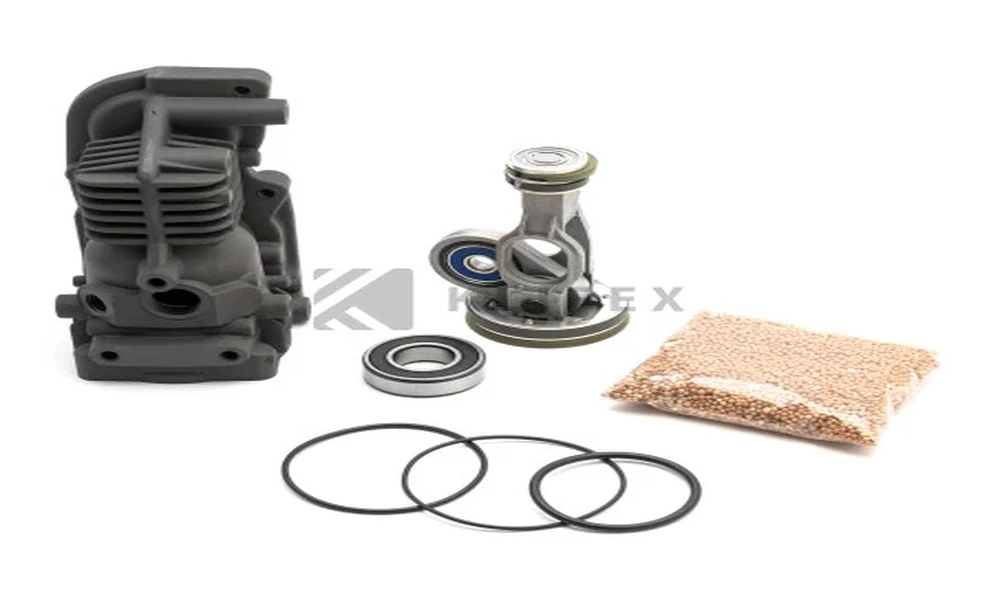
For example, some air suspension compressors fail because seals, piston rings, valves, or other internal components become worn. If the compressor motor and housing remain serviceable, rebuilding the unit may restore proper pressure without requiring a completely new assembly.
Drivers researching air suspension spare parts and repair kits may also find individual components designed to address specific faults rather than replacing an entire suspension unit.
However, repair quality depends heavily on correct diagnosis, compatible parts, proper installation, and the overall condition of the original component.
When Replacement Is Usually the Better Choice
Replacement becomes more sensible when a part has suffered extensive deterioration or repeated failures.
Air springs, for instance, experience constant expansion, compression, heat, road debris, moisture, and temperature changes. Over time, rubber bellows can crack or become porous. A severely deteriorated air spring is unlikely to provide dependable service simply through a minor repair.
Similarly, an air strut with both an air leak and a badly worn shock absorber may justify complete replacement. Installing a new assembly can restore both ride-height control and damping performance.
A compressor that has repeatedly overheated may also have internal electrical or mechanical damage beyond a simple seal failure.
Consider the Age and Value of the Vehicle
Vehicle age can influence the repair-versus-replacement decision.
On a relatively new luxury SUV, installing a high-quality replacement component may make sense because the owner expects many more years of service. On an older vehicle, repairing a serviceable assembly may offer better value, particularly when several suspension components are beginning to show wear.
Car buyers should also inspect air suspension carefully when evaluating a used vehicle. Uneven ride height, excessive compressor operation, dashboard suspension warnings, unusual noises, or an unusually harsh ride can indicate upcoming repair costs.
For sellers, correcting known suspension faults before listing the vehicle may improve buyer confidence and make the car easier to evaluate during a pre-purchase inspection.
Think About Related Components Too
Air suspension faults rarely exist in complete isolation.
A leaking air spring can force the compressor to run more frequently as it attempts to maintain the commanded ride height. Continuous operation creates additional heat and wear, eventually damaging the compressor.
Replacing only the compressor without fixing the original leak could therefore result in another failure.
Technicians should inspect associated air lines, connectors, valve blocks, sensors, mounting points, electrical wiring, and suspension joints whenever major work is performed.
Compare Long-Term Cost, Not Just the Initial Price
The cheapest immediate repair is not always the most economical solution.
A low-cost repair that fails again within a few months can become more expensive once labour, diagnostics, towing, and additional parts are considered. At the same time, replacing an entire assembly when only one serviceable component has failed can also waste money.
Drivers should compare component condition, expected service life, labour costs, vehicle mileage, parts availability, and warranty coverage before deciding.
Final Thoughts
Choosing between repairing and replacing air suspension components should be based on diagnosis rather than guesswork. Small faults involving seals, valves, lines, or serviceable compressor components may justify repair, while badly worn air springs, damaged struts, or repeatedly failing assemblies often benefit from replacement.
For car owners and enthusiasts, understanding how the suspension system works makes these decisions easier. A properly functioning air suspension does more than provide a smooth ride. It also helps maintain vehicle stability, correct ride height, load control, handling characteristics, and overall driving confidence.
